








Wang Yuewen
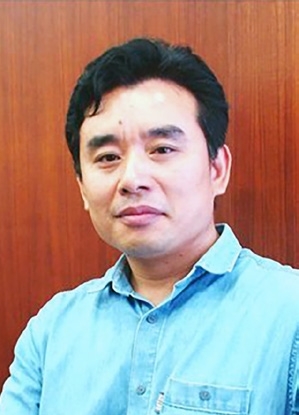
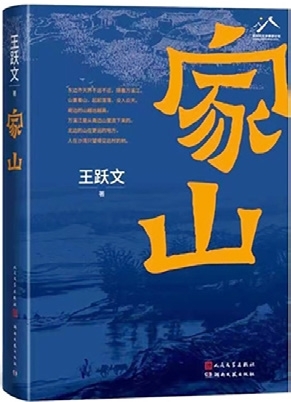
After eight years’ accumulation of historical materials, study of academic monographs and several field investigations, Wang Yuewen completed his work Home Mountain (《家山》) (published by People’s Literature Publishing House and Hunan Literature and Art Publishing House in 2022).
This book tells the story of nearly 30 years from the Great Revolution (1927) to the founding of the People’s Republic of China in 1949, and finally to the year of 2004, reflecting the changes in the writer’s hometown in nearly 100 years. Wang Yuewen used a simple language to show villagers’ characters, which can better shape their personalities and accurately express their thoughts and feelings.
Wang Yuewen became very interested in countryside novels and began his writing after he was 40 years old. “Every writer is faced with the challenge of understanding life truly, accurately and without conception, and then expressing life artistically." He believes that writers should keep a good state when writing and then, write well. When writing, it seems that stories are happening around us. We should share joys and sorrows with the characters in the novel. I hope I can keep my spirit, affection and loyalty in writing.”
Ma Boyong
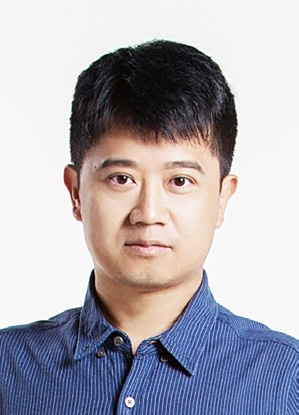
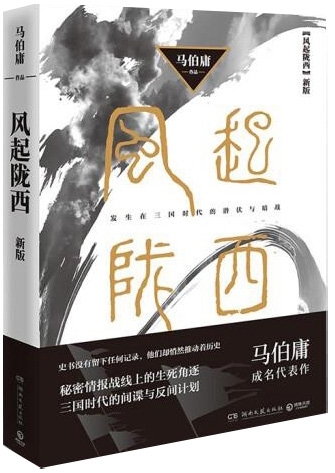
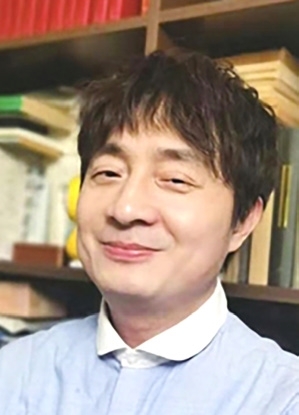
Ma Boyong was born in Chifeng, Inner Mongolia in 1980. He studied in New Zealand for several years and worked in a foreign company for ten years. He began to write full-time in 2015. He is good at writing history-themed stories, discovering micro details in macro histories and writing hidden stories in historical contexts. His masterpieces include The Wind Rises in Longxi (《风起陇西》), The Game of Antiques (《古董局中局》), One Day of Chang'an (《长安十二时辰》), The Ming Dynasty under the Microscope (《显微镜下的大明》), etc.
In 2022, he published the historical novel The Lychee Road (《长安的荔枝》) and the medical history novel The Great Doctor (《大医》). The film and TV series adapted from The Lychee Road (published by Hunan Literature and Art Publishing House) will be screened this year. The novel was inspired by the poem written by Du Mu, a poet in the Tang Dynasty, “At a horse raising red dust the imperial concubine smiled; No one knew it was for the lychee it had brought.” The protagonist of the novel is Li Shande, a “corporate slave” in the Tang Dynasty. He traveled 5,000 miles to escort the fresh lychee to the capital only to feel humiliated by the imperial power.
Ma Boyong believes that many people read novels in the hope of getting experiences they can’t imagine. A writer can’t consider too much about readers and be that hesitant or decisive. If the contents were changed over and over again, the novel’s momentum would be weakend and become incoherent. He said: “Inspiration needs accumulation. When you have enough reading and knowledge, inspiration will pop up after reading a lot of materials. I enjoy the fun of reconstructing history, adding historical reasoning, historical suspense and other elements on the basis of history. I will keep writing. It’s great fun.”
A Yi
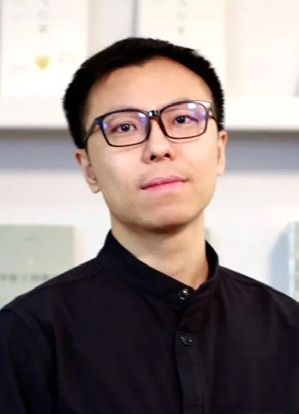
A Yi, whose real name is Ai Guozhu, is a representative writer of post-1970s avant-garde novels. He once worked as a policeman and magazine editor. His novels are deeply rooted in people's daily lives of China’s southern countryside, which integrates the epic style with secular life, and has a deeper meaning towards life.
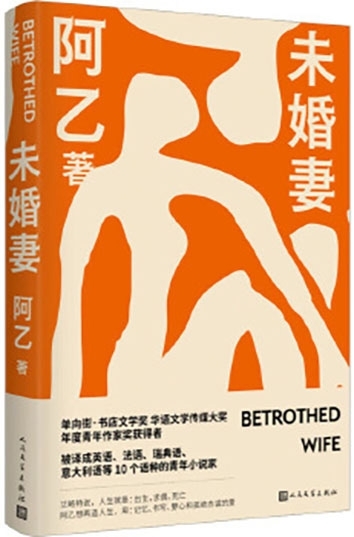
He was rated as the “TOP 20 Great Writers of the Future” by People’s Literature magazine(《人民文学》). His collection of short stories, The Liar Came to the South (《骗子来到南方》) (published by Yilin Press), got inspiration from social news and folk stories. He sought the breakthrough in street rumors and urban legends, telling absurd but true stories of mystery. In 2022, his novel Fiancee (《未婚妻》) (published by People’s Literature Publishing House) came out. Starting from memory, his works look at the fate of the town police, artistic youth and mainlanders, and describe the changes of China.
In terms of the intention of writing, A Yi wrote two sentences in The Liar Came to the South, “Let readers see a certain piece or a certain side of life.” “Life is rolling forward, while we are floating and sinking in it, and I scan one piece out of them.” A Yi doesn’t want to repeat the themes he once wrote, and his writing is always changing. The sentences change from long to short, and also from short to long. He never uses adverbs everywhere in his work, and his articles are full of verbs or full of nouns. A Yi is very concerned about the pursuit of the best details. When using a used detail, he often repeats it, because in his opinion, it is the best expression.
Shuang Xuetao
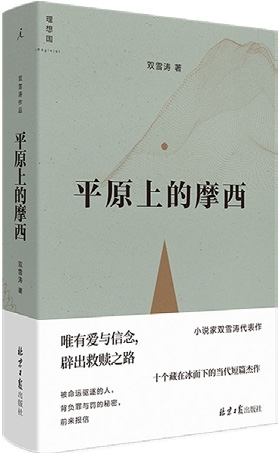
Shuang Xuetao was born in Shenyang in the 1980s. His masterpieces include the novel Tianwu’s Notes (《天吾手记》), The Ghost with Wings (《翅鬼》), and the collection of short stories Moses on the Plains: A Short Novel (《平原上的摩西》) and The Aviator (《飞行家》). A Writer’s Odyssey (《刺杀小说家》) has been adapted into TV series. This year, many of his works will be adapted into TV series or films and then be released.
Shuang Xuetao is known as one of the “Three Outstanding Men in Northeast China”. He inherited Faulkner’s multi-perspective narrative technique and applied elements such as “Northeast China” and “suspense” in his works. He targeted at the tide of massive laid-off workers in the end of last century and the reform of state-owned enterprises. In the context of upheaval, his work presented a sense of nostalgia and also contained a concrete and sincere romantic atmosphere under the rich western post-modern style. Many stories that came to an abrupt end left a broad aftertaste, which broke away from the category of scar literature and personal narration.
Shuang Xuetao loves reciting Tang poems and Song verses since childhood, and has developed the habit of reading and writing. “To give others feelings and write down their thoughts frankly, I think this is the true meaning of writing. Some people don’t have to be the people who make a living by writing, and they can write even without words.” Readers believe that all the characters in his works have a sense of strangeness that is incompatible with the secular world, a persistence and even paranoia that refuses to be domesticated by the world, but they are also charming and vivid because of that paranoia. This is the most attractive and least “realistic” thing of Shuang Xuetao. With the collapse of history, the scars and degradation of the times, people are exiled in the torrent, but they always have some unshakable persistence.
Chen Qiufan (Stanley Chan)
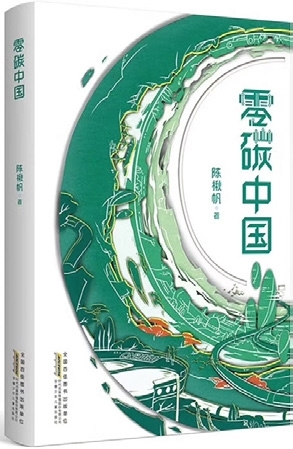
Chen Qiufan, a writer, a practitioner in science and technology and a scriptwriter, was born in Shantou, Guangdong Province in November 1981. His representative works include The Waste Tide (《荒潮》), The Lover’s Farewell (《无尽告别》), The Fish of Lijiang (《丽江的鱼儿们》), etc. China of Zero Carbon (《零碳中国》) is his new science fiction, which is based on the background of carbon neutrality. It aims to show the independent innovation and persistent pursuit of contemporary Chinese researchers, and also to demonstrate China’s adherence to green development and the commitment to global sustainable development.
Chen Qiufan said that every child needs to cultivate curiosity, enthusiasm and imagination about science fiction and everything in the world in this era. He hopes that children can start from the small things around them and practice the path of sustainable development. Chen Qiufan said that China of Zero Carbon conveyed the idea of carbon neutrality in ecological civilization construction.
“During my writing, I have established a new sense of mission - how to popularize China’s scientific and technological innovation achievements, to vividly show Chinese people’s imagination of science and technology, the universe and the future to the world, and artistically integrate the essence of Chinese excellent traditional culture and aesthetics into it. This will be an important topic for us. I hope that through my creation, we can better create the community of a shared future for mankind in the future.”
(Continued on 11) Han Song
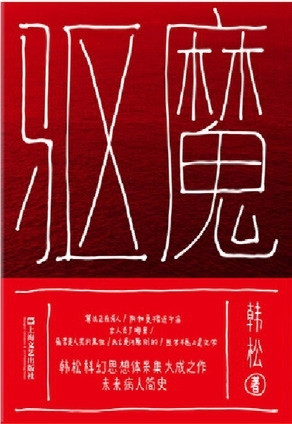
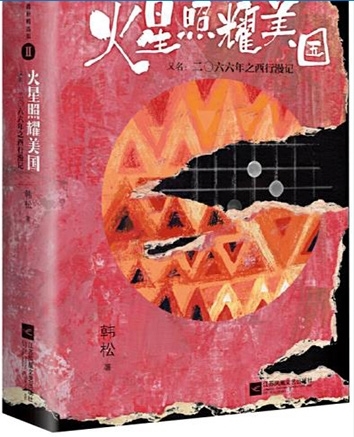
As a reporter of Xinhua News Agency, Han Song has been writing science fiction in his spare time. He has written novels such as Red Star over China in 2066 (《2066之西行漫记》), Let's Search for Aliens (《让我们一起寻找外星人》) and the Hospital trilogy (“医院”) . He is known as one of the “Four Kings” of Chinese science fiction writers. The first installment of the trilogy Hospitaland the second Exorcism (《驱魔》) (published by Shanghai Literature and Art Publishing House) are popular among readers because of the strong humanity and philosophical significance they convey. His works belong to the category of soft science fiction, and often trigger readers’ deep thought.
Han Song believes that the most touching thing about science fiction is to write down the reflection on human nature under the oppression of the virtual and abnormal social environment, as well as the philosophical thinking on some historical issues, and at the same time, to add the influence of cutting-edge technology on society and people. Science fiction is first to write about a world that doesn’t exist. It is an imaginary thing. Yet it is also a kind of realistic literature, and it is necessary to write things that have not happened very much like real existence. The world in science fiction is different from magic since science fiction might turn to reality in the future.
For newcomers to science fiction, it is suggested that they should read more other people’s works, imitate some of them, and at the same time try to deny others’ and our own first ideas and to come up with new ideas.
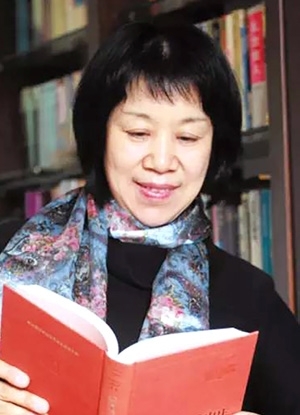
Sun Huifen
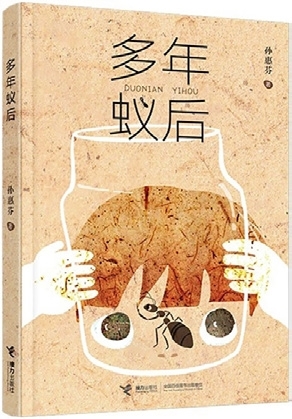
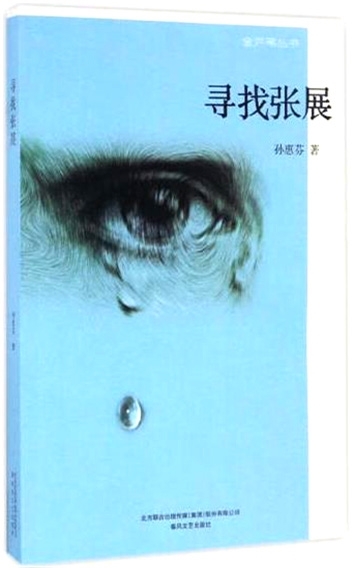
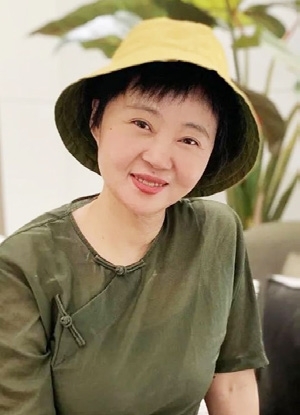
Sun Huifen has written countryside novels Book of Shangtang (《上塘书》), Book of Later Shangtang (《后上塘书》), and also Looking for Zhang Zhan (《寻找张展》), which explore the growth and life truth of the post-90s generation and show her exquisite observation, profound understanding and artistic expression of real life. Her feminist literary work Two Women in Xiema Villa (《歇马山庄的两个女人》) won the third Lu Xun Literature Prize. In 2021, at the age of 60, she launched her first children’s book The Queen Ant Duonian (《多年蚁后》) (published by Jieli Publishing House), and it became the work that marked her transformation in writing.
Sun Huifen was born in Qingduizi Town, Zhuanghe, Liaoning Province. Outside her door is the wilderness, which is remote and frightening. After the epidemic’s lockdown was lifted in 2021, in order to collect materials for the next long novel, she drove to the northernmost valley of her hometown and spent three months listening to the stories of elderly people. In the story of the elderly, she conceived this children’s book.
Choosing a non-fiction writing method is an important gain from her search in recent years. Sun Huifen believed that “If you are artistic, then art is life. If you love life, then life is art. Creating a sense of reality is easy to open up the artistic channel between readers and novelists, and thus, non-fiction writing is particularly powerful.”
Zhou Xiaofeng
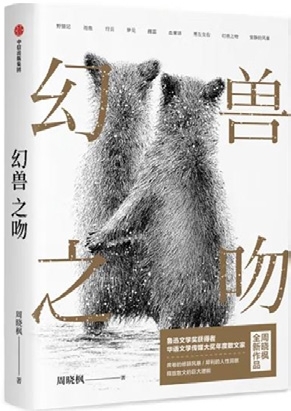
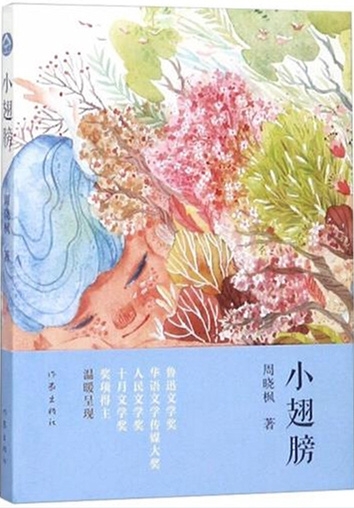
In 2013, Zhou Xiaofeng gave up her career as an editor for more than 20 years and became a professional writer. She has successively created a collection of essays, such as Singing of the Whale (《巨鲸歌唱》), Like the Migratory Bird (《有如候鸟》) and The Kiss of Cub (《幻兽之吻》), and formed a Sea, Land, Air trilogy, winning the Lu Xun Literature Prize, Zhu Ziqing Literature Prize, Feng Mu Literature Award and other awards in the arena of prose. Her first long fairy tale, Little Wing (《小翅膀》) (published by the Writers Publishing House), won the 11th National Outstanding Children’s Literature Award.
In her fairy tales and prose works concerning fairy tales, we can vaguely see how a person who longs for lifelong growth, a person who hopes to always have childlike curiosity, desire and vitality, and how the person views himself and the world in the illusion and reality, innocence and adulthood, darkness and warmth.
Zhou Xiaofeng said that her writing is still full of humility and carefulness. She believes that it is of paramount importance to write accurately and concisely. Conciseness can be reaching the destination quickly or getting to the destination step by step. The high-speed train indicates conciseness, and a road trip to every scenic spot is also concise without detours. Follow the content when writing, let the content guide us. “I take every subject seriously, ask myself to do my best, and expect my works to be sincere and unique ... This is my unchanged wish, just like when I first started writing.”
Xue Tao
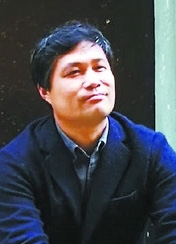
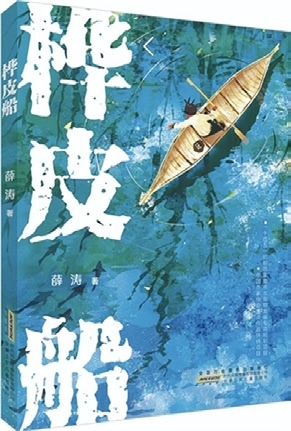
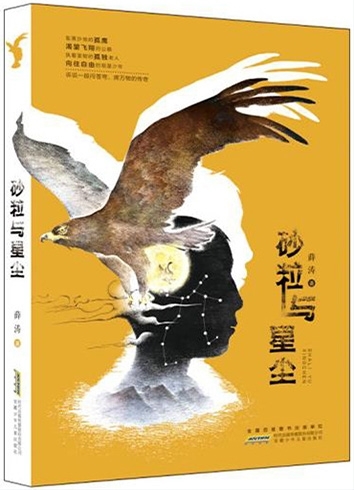
Xue Tao was born in Changtu, Liaoning Province in 1971. He used to be a high school teacher and a newspaper supplement editor. In 1994, he turned to children’s literature writing. His masterpieces include the novel Together (《形影不离》), The Lonely Squadron Leader (《孤单的少校》), The Sand and the Stardust (《砂粒与星尘》), and won various awards in China children’s literature. In recent years, his creation has turned from fantasy literature to reality, and taken root in China’s Northeast. In 2022, the new work Birch Boat (《桦皮船》) (published by Anhui Children’s Publishing House) came out.
His writing is influenced by avant-garde literature. Early fantasy literature will open up another world on the basis of reality, but there will always be a corridor connected with reality. He firmly believes that while pleasing people, good literary works should also inspire, warn and comfort people. He also deeply believed that “Children’s literature should be profound in a simple way. The language should be brighter.” Xue Tao insisted on writing the best literary works and paid tribute to the classics. He said, “I like the heavy, profound but particularly simple works. I also want to be simpler without losing my depth.”
Xiong Liang
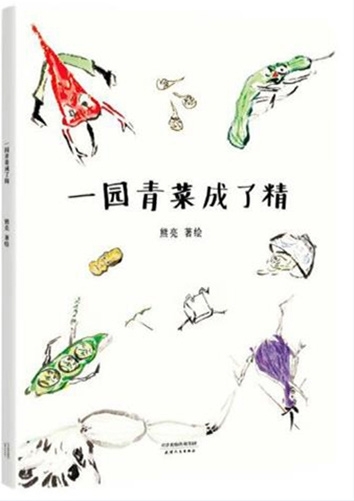
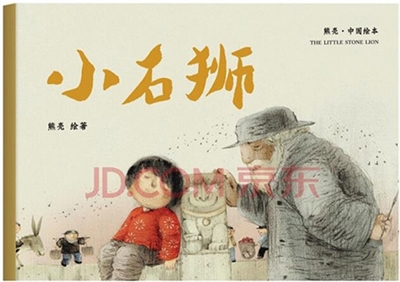
In recent years, Xiong Liang has become a pioneer in promoting the development of China’s original picture books. His works have been translated overseas and won numerous awards. The words in his picture books are free, ethereal, smart, humorous and interesting. The drawings are also concise and pure, telling the story of Chinese traditional culture and oriental philosophy.
Xiong Liang says that reading is of great significance to creation. “The book depicts different cultures, different people’s ideas about life, and the thought of people in different times and different ages. The books can open up endless space for children.” He also stressed, “Never force a child to read something that she or he is not truly interested in. Starting from interest, reading will become a dialogue, and there will be communication between readers and authors. That is the real reading.”
“To create children’s picture books, the first thing to consider is how to become a child again. How to enter children’s world, see the world with their eyes, listen to the world with their ears and touch the world with their hands,” he stated. Years of picture books’writing made Xiong Liang feel that “When making books for children, we should create a channel for children to experience, grow up and solve various problems by themselves.” Besides, humor is the most important thing in picture books, since it can help children keep a sense of humor when facing problems.